Mop Buckets, Pet Bowls, and Puddles: The Hidden Risks for Crawling Babies
7 min read
By Blue Dolphin Swim School
In this article
There’s a moment every parent remembers. Your baby rocks back and forth on their hands and knees for a week or two, and then one morning they just go. Across the rug, under the table, straight toward whatever caught their eye. It’s thrilling. It’s also the exact moment your home quietly becomes a different place.
I’ve been in the swim safety world a long time, and I talk with parents about pools constantly. Fences, life jackets, swim lessons, supervision at the lake. All of that matters. But when a family tells me their baby just started crawling, the conversation I really want to have isn’t about the pool at all. It’s about the mop bucket in the laundry room, the dog’s water dish by the back door, and the puddle that forms on the patio every time it rains.
These are the water sources nobody thinks of as water hazards. That’s exactly the problem.
Why Small Water Is a Big Deal at This Age
A crawling baby can drown in one to two inches of water. I know that sounds hard to believe, so here’s the why behind it.
Babies are top-heavy. Their heads make up a much bigger share of their body weight than ours do, and their arms and neck haven’t built the strength to push back up from a face-first tumble. If a baby leans over the edge of something to get a closer look at the water, which is exactly what curious babies do, gravity takes over. Once their face is in the water, many babies simply can’t lift themselves out.
And it’s quiet. There’s no splashing or crying like you’d expect. A baby in trouble in a bucket or a bowl often makes no sound at all. That’s why these accidents tend to happen during the most ordinary moments: a phone call, a knock at the door, a minute spent switching the laundry.
Mop Buckets: The One I Worry About Most
If I could get every parent of a crawler to change just one habit, it would be this one.
Buckets are dangerous in a way that’s hard to picture until someone explains it. When a bucket is partly full, the water makes the base heavy and stable. A baby can pull up on the rim, lean in to look, and topple headfirst inside. The bucket doesn’t tip over. It holds them there, upside down. The U.S. Consumer Product Safety Commission has been warning families about five-gallon buckets for decades for exactly this reason.
The fix is simple, and it has to happen every single time. When you finish mopping, dump the water right away. Rinse the bucket, flip it upside down, and store it somewhere your baby can’t reach. Never leave a bucket with any liquid in it, even “just for a second” while you grab something from the other room. If you get interrupted mid-cleaning, take the bucket with you or empty it first.
The same goes for any container that holds water around the house: buckets in the garage, a cooler full of melted ice after a camping weekend, the tub you use for soaking laundry.
Pet Bowls: Easy to Forget, Easy to Fix
Dog owners, this one’s for you. A large, heavy water bowl holds more than enough to cover a baby’s nose and mouth. And to a crawling baby, the dog’s bowl is the single most fascinating object in the kitchen. It’s at eye level. It moves when you splash it. The dog drinks out of it, so obviously it’s worth investigating.
A few options work well. You can move the water bowl behind a baby gate, into a room your baby doesn’t have access to. Elevated feeders that sit above crawling height help too. Some families switch to a smaller bowl and refill it more often during the crawling months. Whatever you choose, stay alert whenever your baby and pet share a space, and don’t assume the dog will “alert” you if something goes wrong.
Puddles, Birdbaths, and the Backyard
Colorado gives us plenty of reasons to keep an eye on the yard. Spring snowmelt pools in low spots. Afternoon thunderstorms leave water sitting on patios and in clogged drains. Window wells, birdbaths, small garden ponds, and decorative fountains collect water quietly and stay full for days.
Babies get faster than we expect, and outdoor time is where that speed catches parents off guard. Before you set your little one down outside, take thirty seconds and scan the area for standing water. Tip over anything that’s collected rain. Keep doors to the yard locked or childproofed so a crawler can’t slip out on their own, and if you have a pond or water feature, consider fencing or covering it until your kids are older.
When your baby is outside, stay within arm’s reach. Not across the yard watering plants. Right there.
Get Down on Their Level
Here’s a trick I share with parents all the time, and it’s one of my favorites because it actually works. Get down on your hands and knees and crawl through your house.
It feels a little silly. Do it anyway. From down there, you’ll see things you never notice standing up. The toilet that’s easy to pull up on. The bathroom door that doesn’t fully latch. The cooler in the garage. The bucket under the sink. The dog’s bowl right in the path between the kitchen and the living room.
Then fix what you find. Close bathroom doors and use doorknob covers or latches. Install toilet lid locks. Drain sinks, tubs, and wading pools as soon as you’re done with them. Most of these changes take minutes, and they last for the entire crawling and toddler stage.
Supervision Is Still the Biggest Layer
Barriers and habits help a lot. But nothing replaces an adult who’s actually watching. The riskiest moments are the ones where attention gets pulled away: a phone buzzing, the doorbell, a sibling who needs something. If you have to step away, scoop up your baby and bring them with you. It takes two seconds, and it closes the gap where most of these accidents happen.
Swim lessons belong in the picture too. They don’t replace supervision, ever. But babies who become comfortable with water on their face and learn early breath control and back floating are building reflexes that matter when the unexpected happens.
Start Building Water Safety Skills at Blue Dolphin Swim School
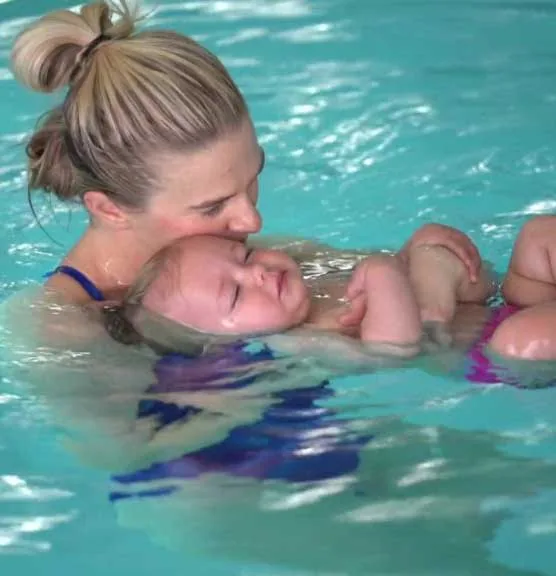
Home safety and swim skills work best together. At Blue Dolphin Swim School, our Baby Love Infant Swim program welcomes babies from 4 to 24 months in warm, 92-degree water, with instructors who know how to make those first experiences calm, playful, and safe. Parents leave every class with a little more confidence, and plenty of practical ideas to use at home.
We serve families in Westminster, Arvada, Broomfield, Superior, Erie, Thornton, Louisville, Lafayette, Boulder, Denver, and surrounding Colorado communities. Visit our Baby Love Infant Swim page to learn more, call us at 303-254-6920, or register today to get your little one started.
Frequently Asked Questions
How much water does it take for a baby to drown?
As little as one to two inches. Babies have heavy heads and limited upper-body strength, so if they fall face-first into shallow water, they often can’t lift themselves back out. Depth matters far less than access, which is why small household water sources deserve so much attention.
Why are mop buckets considered so dangerous?
When a bucket has water in it, the weight keeps it from tipping over. A baby who leans in to look can fall in headfirst and get stuck. Always empty buckets right after use, store them upside down, and never leave one unattended with liquid inside.
Do I need to get rid of my dog’s water bowl while my baby is crawling?
No, but it helps to move it. Placing the bowl behind a baby gate, using an elevated feeder, or switching to a smaller bowl during the crawling stage all reduce the risk. Your pet still has water, and your baby can’t reach it.
What outdoor water should I watch for in my yard?
Puddles, clogged drains, window wells, birdbaths, garden ponds, fountains, wading pools, and buckets left outside. In Colorado, snowmelt and summer storms can create standing water fast, so scan your yard before every outdoor play session and tip out anything that’s collected.
At what age should I start childproofing for water hazards?
Before your baby starts crawling. Most babies begin moving somewhere between 6 and 10 months, and they get quick almost immediately. Childproofing ahead of time means you’re not scrambling once they’re on the move.
Can swim lessons protect my baby from household drowning risks?
Swim lessons are one important layer, but they never replace supervision or a safe home setup. Infant lessons teach breath control, comfort with water on the face, and early back-floating skills, which can make a real difference in an emergency. The strongest protection comes from combining lessons with active supervision, barriers, and good habits at home.